Monday, April 30, 2007

Paris, France

P.Ou and I went to Paris, France in April 11-17, 2007. Paris is a lovely city with lots of activities for tourists. We followed a guide book called Top 10 Paris to visit 10 highlights and Versailles. We were recommended to buy 5 days, zone 1-3 ticket for public transport and six-day museum passes which we could use them to travel around central Paris on a budget. We stayed in Best Western, Derby Eiffel Hotel in Ecole Militaire which closed to Eiffel Tower and there are many cafés which Parisians like to drink outside from morning until midnight. We ate a couple breakfasts in the hotel, after that we cooked instant noodles and coffee in our room. We also packed our lunch to eat in the park or the places that we visited.
For entertainment venues, we did not go to the famous Moulin Rouge, but we went to sit in the first row of Crazy Horse Saloon. The Saloon has a reputation for putting the most professional and sexiest production with striptease features together with glamorous dancing girls and other cabaret acts.
Except using mass transportation, we used our feet to travel around. I have gained great experience and 6 days in Paris seem to be a short period; I wish I could visit Paris again.

See pictures of this trip at http://picasaweb.google.com/arthivon/Paris2007

Arc de Triomphe

The Arc de Triomphe is one of the most famous monuments in Paris. It was commissioned in 1806 after the victory at Austerlitz by Napoleon, but not completed until 1936, due, in part, to Napoleon’s fall from power. We climbed 284 steps to the top of the Arc to see magnificent view of Paris. To the east is the Champs Elisées, one of the world most famous avenues, and to the west is the Grande Arche of La Défense. Beneath the Arc is the eternal flame of the Tomb of the Unknown Soldier from the World War I buried on November 11, 1920.

Musée d’Orsay

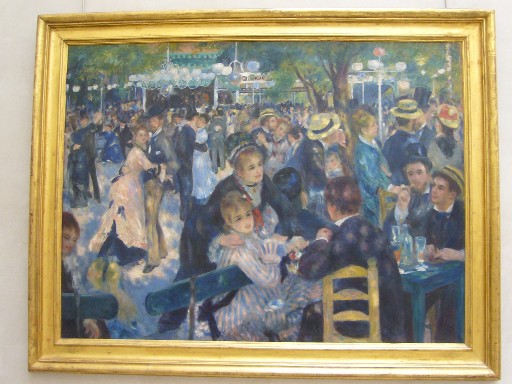
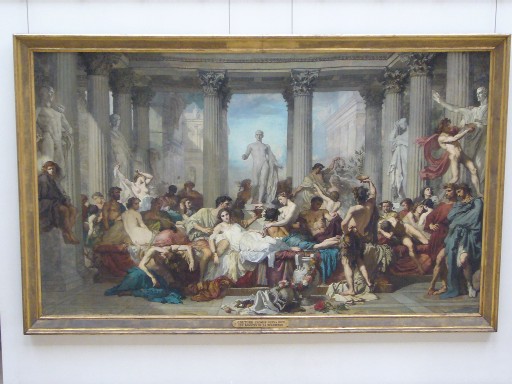
This collection covers a variety of art forms from the 1848-1941 period, including paintings, sculptures, furniture, and photography, and is best known for its superb impressionists masterpieces by popular painters such as Monet and Renior. Its setting, in a converted railway station, is equally impressive. Built in 1900, in time for the Paris Exposition, the station was in use until 1939, when it was closed and largely ignored. It was later used as a theatre and as auction rooms, and in the mid-1970s was considered demolition. In 1977, the Paris authorities decided to save the imposing station building by converting it into this striking museum.

From left to right is paintings of Renoir, Monet, Gauguin, and Thomas Couture.


Eiffel Tower

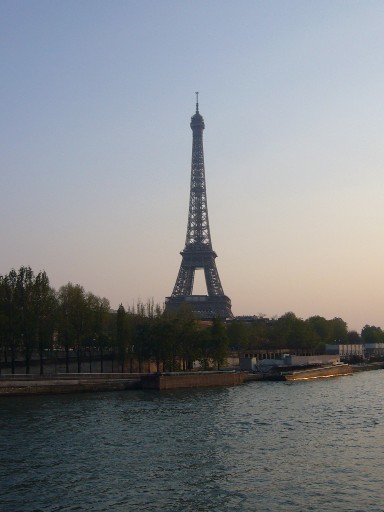
The Eiffel Tower (Tour Eiffel), named after its designer, engineer Gustave Eiffel, is the tallest building in Paris and one of the most recognized structured in the world. The tower was completed in 1889 as part of the Universal Exhibition. At 320 m (1,050 ft) high, it was the world tallest building until it was surpassed by New York’s Empire State Building in 1931. Despite the delicate appearance, it weighs approximately 10,000 metric tons and engineer was so sound that it never sways more than 7 cm (2.5 in) in strong winds.

Hôtel des Invalides

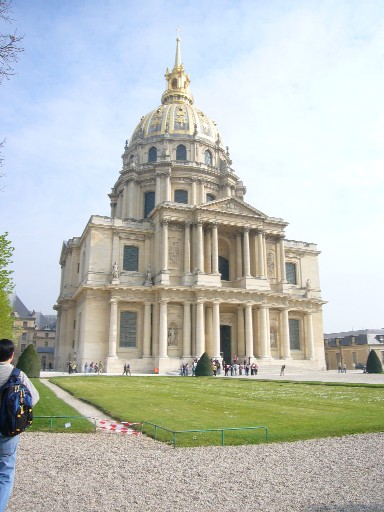
The “invalids” for whom is imposing Hôtel was built were wounded soldiers of the late 17th century. Louis XIV had the building constructed between 1671-8, and there are still old soldiers housed here, although only a dozen or so compared to the 6,000 who first moved in. They share their home with the greatest French soldiers of them all, Napoleon Bonaparte, whose body rests in a crypt directly below the golden dome of the Dôme Church. Other buildings accommodate military offices, the Musée de l’Armée and smaller military museums.

Musée du Louvre

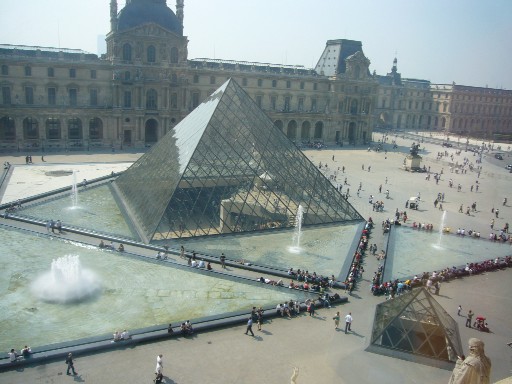
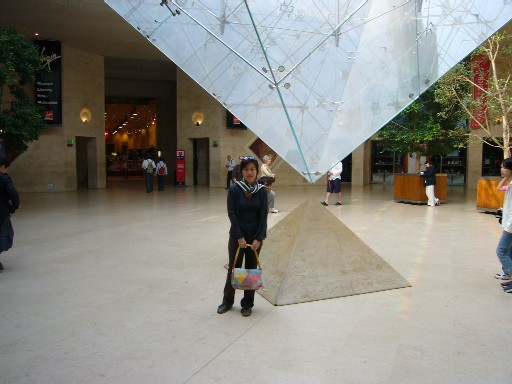
One of the world’s most impressive museums, the Louvre contains more than 350,000 priceless objects. Built as a fortress by King Philippe-Auguste in 1190, Charles V (1364-80) was the first king to make it his home. In the 16th century François I replaced it with a Renaissance-style palace. The reigns of Louis XIII and Louis XIV had a major impact on the Louvre and Tuileries palaces. The extension of the west wing of the Cour Carrée under Louis XIII marked the beginning of an ambitious program of work that would be completed by Louis XIV and added to by Louis XV, resulting in the Louvre that we see today. Revolutionaries opened the collection to the public in 1793. Here we can take pictures, with no flash, of paintings except Mona Lisa.

Notre-Dame

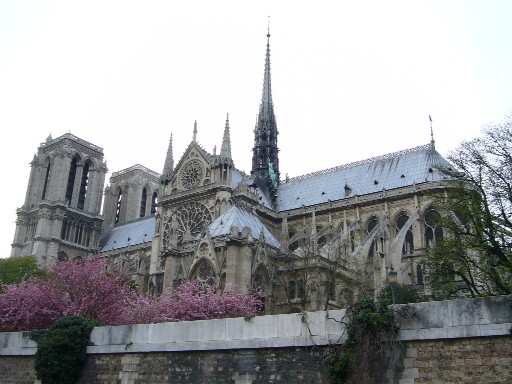
Notre Dame de Paris is a Gothic cathedral on the eastern half of the Île de la Cité, the natural island in the Seine within the city of Paris, and is considered the heart of the country, both geographically and spiritually.
After Pope Alexander III laid the foundation stone in 1163 during the reign of Louis VII, an army of craftsmen toiled for 170 years to realize Bishop Maurice de Sully’s magnificent design. Almost destroyed during the Revolution, the Gothic masterpiece was restored in 1841-64 by architect Viollet-le-Duc, one of France’s most famous architects. The name Notre Dame means “Old Lady” in French. Some 130 m (430 ft) in length with a high vaulted nave and double side aisles, it also contains France’s largest organ.

Panthéon

Panthéon was originally built as a church, on the instigation of Louis XV to celebrate his recovery from illness in 1744. Dedicated to St.Genevieve, the structure was finished in 1790 and was in intended to look like the Pantheon in Rome, hence the name. During the Revolution it was turned into a mausoleum for the city’s great achievers, but Napoleon gave it back to the church in 1806. It was later reverted to the church once more, before finally becoming a public building in 1885. Beneath the central dome shows the iron sphere from the pendulum which demonstrated the rotation of the earth of Physicist Léon Foucault since 1851. It is also Tomb of Voltaire and Victor Hugo who wrote Les Misérables and the Hunchback of Notre-Dame.

Centre Georges Pompidou

It is one of the world’s most famous pieces of modern architecture, the Pompidou Centre opened in 1977, when architects Richard Rogers and Renzo Piano startled everyone by turning the building “inside out”, with brightly colored pipes displayed on the façade. Designed as a cross-cultured arts complex, it houses the Musée National d’Art Moderne (Modern Art Museum) as well as a cinema, library, shops, and performance space. The outside forecourt is a popular gathering-spot for tourists and local alike.

Sacré-Coeur

The Sacré-Coeur Basilica is a Roman Catholic basilica and popular landmark in Paris, dedicated to the Scare Heart of Jesus. The basilica is located at the summit of the Montmartre butte, the highest point of the city and is one of the most photographed imaged of the city. It was built as a memorial to the 58,000 French soldiers killed during the Franco-Prussian War (1870-71) and took 46 years to build, finally completed in 1923 at a cost of 40 million francs (6 million euros). Priests still pray for the souls of the dead here 24 hours a day. Although the interior is less impressive than many other churches in the city, people flock here for the panoramic views particularly at sunset.

Sainte-Chapelle

The Gothic chapel, built by Louis IX (1214-70) as a shrine for his holy relics of the passion and completed in 1248, is considered the most beautiful church in Paris, not least for its 15 stained-glass windows soaring 15m (50ft) to rose windows which added to the upper chapel in the 15th century. The church was grievously damaged during the Revolution but restored in the mid-19 century.

Château de Versailles

In 1664, Louis XIV turned his father’s old hunting lodge into the largest palace in Europe and moved his court here in 1678. It was the royal residence for more than century until Louis XVI and his queen Marie-Antoinette fled during the Revolution. Touring in the château, we walked through the church, the king and queen’s bedrooms and the highlight is glass mirror panel. The garden of Versailles is quite large so we took a small bus to the Estate of Marie-Antoinette which is on the northeast side of the area. We visited Grand Trianon and Petit Trianon. The Grand Trianon was built in Versailles by Louis XIV, and it was designed to be a place where he and his close family could escape from the hectic life of court at the palace. The Petit Trianon was built by the order of Louis XV for his long-term mistress, Madame de Pompadour, later Louis XVI gave the château and its surrounding park to his queen, Marie-Antoinette for her exclusive use and enjoyment.
It is one day trip from Paris to Versailles; we took train from Gare Montparnasse to Versailles-Rive Gauche, and then walked to the palace.

Thursday, April 20, 2006

Shanghai - Hangzhou

In April, 2005, our group, comprised of 7 members - P.Oy, P.Ohm, Peaw, P.Ou, my Mom, Na Noi and I, took a trip to Shanghai. Arranged by P.Oy and P.Peaw, we planed to visit a few remarkable places in Shanghai and traveled by car to Hangzhou and 2 Local guides were hired to lead the tour for each city. Besides these 2 cities, we went to Zhouzhuang, the water townships, which appeared to be one of shooting location of MI-III.

I knew nothing about China, just heard only its reputation of tourism and recognized the movie "Shanghai Godfather" which I was addicted to when I was young.

We stayed 2 nights in a very nice hotel on shopping area, Nanjing Rd., in Shanghai and 1 night in a 4-Chinese star hotel in Hangzhou. It is a notable trip of which we still talked about crowded people, serious bargaining, different food, and no-English .

See pictures at http://picasaweb.google.com/arthivon/Shanghai2006#

Shanghai

We stayed in a hotel on Nanjing Road, China's historic No.1 shopping and walking street. I took this picture from my room.

We visited Jade Buddha Temple, a fine Burmese white jade Buddha is the main attraction.

We took a quick walk through Yu Garden & Bazaar, established in 1577. Yu Garden is a maze of classical Ming & Qing Dynasty. Pavilions, rock gardens, arched bridges & sparkling ponds are surrounded by a lively and crowded bazaar.

The house was built as if it was one of the king's palace; dragons, the king's symbol, are placed on roof ridge but all dragons are a bit different from the king's, otherwise the owner and whole family could be executed.

In the old day, wealthy Chinese noblemen had their owned opera house which was designed and built acoustically.

The Bund is the must visit place in Shanghai. It is Asia's former golden water frontier of finance, commerce and trade and is now enjoying renaissance with the opening of new up-market entries and emporiums from early 20th century.

The opposite side of the river is Pudong New Area which people can transport from the Bund by underwater train. The area has developed in just five years, and Lujiazui in Pudong has become one of the foremost world class financial and trade zones in Asia. The landmark construction is Oriental Pearl TV Tower. Seeing skyscrapers where, in MI:III movie, Ethan Hunt climbs and flies among these buildings, he also flies across the wide river to the Bund, anyway it is mission impossible!

We went shopping at Xiangyang Fashion Market, an outdoor market with hundreds of stalls selling designer label clothing and accessories. I was offered catalogs of bags and watches since I got off a cab. I was scared to buy things with great bargain, and I bought nothing.

Zhouzhuang

Zhouzhuang, one of the most famous water townships in China, situated in Kunshan City which is only 30 kilometers (18 miles) southeast of Suzhou. It is noted for its profound cultural background, the well preserved ancient residential houses, the elegant watery views and the strong local colored traditions and customs.


In an area of half a square kilometer (124 acres), 60 percent of the Zhouzhuang's structures were built during the Ming and Qing Dynasties, which is from 1368 to 1911. Taking the most convenient form of transport in Zhouzhuang, a gondola, we will present some of the breathtaking sights one by one.

Both sides of narrow road are food stalls and handicraft shops.

It is its famous food, gammon stewed in gravy, and I bought one home.

Seeing locals enjoyed Tofu dessert, P.Ou tasted one and said it was different.

Hangzhou

Hangzhou is one of the important tourism cities in China, famous for its natural beauty and historical and cultural heritages. The city located on the low reaches of Qiantang river in southeast China, with a distance of 180 kilometers to Shanghai.

The must visit place is Xihu-West Lake with the area of 5.6 square kilometers. We went in a boat which was packed by the Chinese to the other side of the lake, and I felt a bit uncomfortable since everywhere was overcrowded.

After getting off the boat, People walked by the flow to take their bus at the meeting point.

It is the Six Harmonies Pagoda which the name 'Liuhe' comes from the six Buddhist ordinances and it is said that the reason for building this pagoda is to calm the tidal waters of the Qiantang River, and as a navigational aid. It was also packed so we decided not to stop by.

We went to see the show in a theater built in Song Dynasty architecture. The theater was full with more than 10,000 audiences, and the performance looked magnificent except they spoke only in Chinese language.

The Longjing village produces one of China's most famous varieties of green tea. They show different stages of production and sell tea. It is said that Longjing tea contains vitamon C, amino acid, and has one of the highest concentration of catechins among teas, second only to white tea. The name of Longjing means dragon well.

Tuesday, November 15, 2005

Surprised Birthday at Chieng Mai

During November 11-13, 2005, I went to Chieng Mai with P.Ou, POy, P.Ohm, Noon, and Pum+. We went to Wiang Kum Kam, the two Napamaytanidol Chedi, Doi Inthanon, Mae Ya Waterfall, Phra That Doi Suthep. We also walked thru night weekend market which all traffic halted, people are free to walk without hassle and stress of cars and motorcycles whizzing by.

November 12 was my birthday, I wonder a bit why no one said happy birthday to me. In the evening, we dropped by a few places, supermarket, bakery, Italian restaurant named Giorgio to book a table for dinner, then went back to refresh ourselves at the hotel. At the restaurant, I was surprised that dessert was a birthday cake, they bought and brought to the restaurant before went back to the hotel without my attention. It was all planned by P.Ou.


Chieng Mai

Wiamg Kum Kam is a recently discovered ancient city, believed to have been built during the reign of King Meng Rai in 1286, the city was once the capital of the Lanna Kingdom until the Maenam Ping flooded and wiped out the whole city. Explaining by local guide, there are more than 20 ancient ruins inside and around Wiang Kum Kam including Wat Chedi Liam, Wat Chang Kham, Wat Noi, Wat Pu Pia, Wat Ku Koa, Wat E Kang, Wat Hua Nong, and Wat Pu Song which are dated from the 21st 22nd Buddhist centuries.

Doi Inthanon is Thailand's highest mountain which is 2,565 meters above sea level. On the main road to the summit of Doi Inthanon stand the two Napamaytanidol Chedi. These temples were built to honor the 60th birthday of the King and Queen in 1987 and 1992 respectively. The mountain forms many beautiful waterfalls, namely Mae Ya, Mae Klang, Siriphum, Wachirathan, Mae Pan.

Before went back, we visited Wat Phratat Doi Suthep because it would say, you haven’t really gone to Chiang Mai unless you have been there. This place is the most important and famous Chiang Mai landmark. Built in 1383, the temple is 3,520 feet above sea level, and can be reached via a steep Naga staircase comprised of 290 steps or railcars. This mountaintop temple has a pagoda that houses holy Buddha relics, lies in the middle of a square marble-tiled courtyard. The four corners of the pagoda are adorned with parasols which represent royal regalia. The temples courtyard is lined by a cloister, which contains images and murals depicting Buddha life. There are also two viharns situated in the middle of the east and west sides of the cloister.

More photos at http://picasaweb.google.com/arthivon/ChiengMaiNov05

Monday, January 10, 2005

USA - California and Las Vegas

I, P.Ou and Noon went to USA during December 20, 2004 to January 3, 2005. We landed at LAX, Los Angeles. As usual, we booked hotel via internet from Bangkok so we had fixed itinerary. We drove like a loop from Los Angeles to Las Vegas, Yosemite National Park, San Francisco, Monterey, Solvang, and back to Los Angeles. At Los Angeles, we visited many places, such as UCLA, Chinese Theater, Kodak Theater, Hollywood Blvd., and Santa Monica.

See all US trip photos at http://picasaweb.google.com/arthivon/USA2004#

Las Vegas

Las Vegas was so cold at night during our visit, but it was worth to go out at the Strip and saw lights, Bellagio’s dancing fountains, and Mirage’s volcano, etc. We stayed at New York-New York and went to Aladdin, the Venetian, Madam Tussauds’ Wax Museum, Caesars Palace, Glitter Gulch, and Hoover Dam. No gambling in this trip.

I was on the Hoover Dam, Nevada side, the other side is Arizona.

Yosemite National Park

There was snow at Yosemite National Park by the time we were there. We took lots of photos with El Capitàn, snow field, creek, and waterfall. El Capitàn is the world’s largest exposed granite rock standing at the western entrance of the valley. It is named by US soldiers, who in 1851 were the first white Americans to visit the valley. El Capitàn is the Spanish phrase for capitain. We stayed at a hotel western side of the park on Christmas day.

P.Ou and El Capitàn.

Mii, Snow, Creek, Tree, and Mountain.

Yosemite Waterfall.

Small Mii and Big Trees.

San Francisco

We stayed in a boutique hotel in San Francisco and heard about Tsunami hit South of Thailand from CNN, we were stunned and thought about our dive master at Koh Phi Phi, how he was. We went to UC Berkley, Golden Gate Bridge and Golden Gate Park, Lombard Street, Fisherman’s Wharf, Palace of Fine Arts, and Museum of Modern Arts as well as ate at China Town and took a San Francisco’s Cable Car.

UC, Berkley.

Cold! Golden Gate Bridge.

Palace of Fine Arts.

Monterey

We selected a room with fireplace in Monterey. We went to see Monterey Bay Aquarium, there are many interesting exhibits, including hand-feeding live shows by diver, jellies, shark, etc. It is a big aquarium, we wish we should have more time to appreciate all the exhibits. We walked along Cannery Row which used to be the famous location of sardines processing in the past, currently the factories turn to be shops and restaurants.

Jellies in Monterey Bay Aquarium.

Cannery Row, it name comes from its past popular fish cannery factory.

In front of Bubba Gump Restaurant, there is Forrest Gump's shoes, suitcase, and chocolate box.